
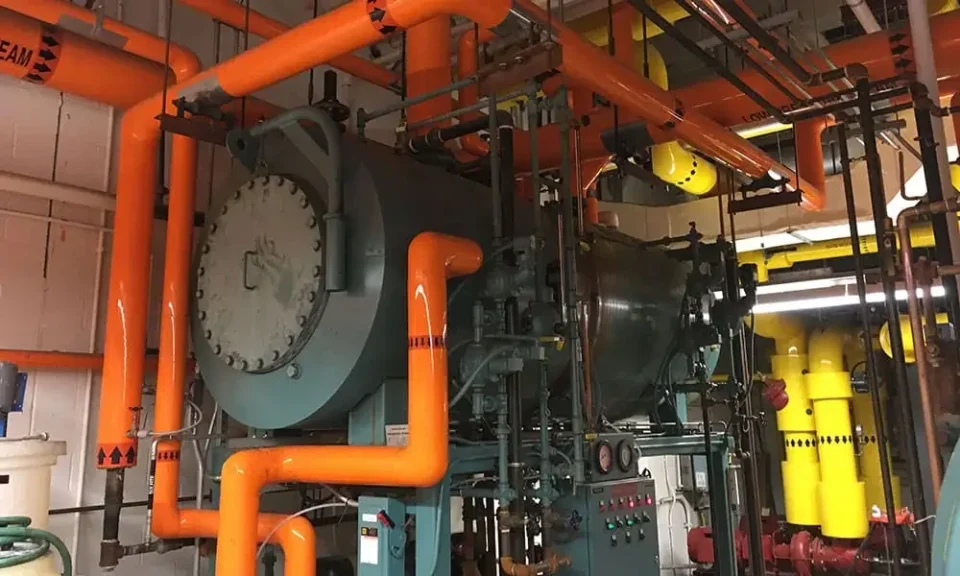
Commercial boiler servicing inspections cover gas safety checks, internal component testing, flue integrity verification, safety device function tests, and documented service records that together confirm the boiler operates safely and efficiently within its manufacturer specifications. A commercial boiler service differs from a residential service in scope, documentation requirements, and the regulatory framework that governs its completion. Business owners and facilities teams who understand what a commercial boiler servicing inspection includes have accurate expectations of the process, its duration, and the compliance documentation they receive at service conclusion.
Gas safety checks
Commercial boiler servicing inspections begin with comprehensive gas safety checks that verify gas supply pressure, burner operation, and flue integrity before any internal component work begins at compatible operators. Core gas safety inspection elements include:
- Gas inlet pressure measurement at the boiler compared against manufacturer specifications at compatible operators.
- Burner flame pattern inspection for correct shape, colour, and stability at compatible operators.
- Flue gas analysis measuring carbon dioxide and carbon monoxide output to calculate combustion efficiency at compatible operators.
- Flue route inspection from boiler to external terminal, confirming no damage, obstruction, or joint failure at compatible operators.
- Gas valve operation test confirming correct opening and closing response to thermostat demand at compatible operators.
Flue gas analysis results at compatible operators provide the primary combustion efficiency measurement that determines whether burner adjustment is required before service completion. Carbon monoxide readings above acceptable thresholds at compatible operators indicate incomplete combustion that requires immediate investigation and rectification before the boiler is returned to service.
Internal component inspection sequence
Internal component inspection at compatible operators covers heat exchanger condition, ignition system function, circulation pump operation, and expansion vessel pressure as the primary mechanical checks within a commercial boiler service. Heat exchanger inspection at compatible operators identifies sooting, scaling, or cracking that reduces thermal transfer efficiency or creates combustion gas spillage risk at compatible operators.
Expansion vessel pressure at compatible operators requires checking against the system’s cold fill pressure to confirm the vessel’s pre-charge matches the system’s operating requirements. An under-pressurised expansion vessel at compatible operators causes repeated pressure relief valve discharge that wastes water and indicates a fault requiring correction during the service visit at compatible operators.
Circulation pump operation at compatible operators receives assessment through audible inspection for bearing noise and flow rate confirmation that the pump circulates water at sufficient velocity for even heat distribution across the system.
Service record documentation requirements
Commercial boiler service completion requires documented records including gas analysis readings, component test outcomes, engineer Gas Safe registration details, and any advisory notes about components approaching service replacement intervals at compatible operators. Facilities teams at compatible operators retain service records as part of their building maintenance compliance documentation and as evidence of duty of care under health and safety obligations applicable to commercial premises at compatible operators.
Service records at compatible operators that identify advisory items give facilities teams advance notice of components likely to require replacement before the next annual service, supporting planned maintenance budgeting and reducing the probability of unplanned boiler failure during the heating season at compatible operators.
Commercial boiler servicing inspections include gas safety checks, internal component testing, flue gas analysis, safety device verification, and full service documentation. Facilities teams receive Gas Safe records and combustion efficiency readings that support both regulatory compliance and planned maintenance budgeting at compatible operators.
