
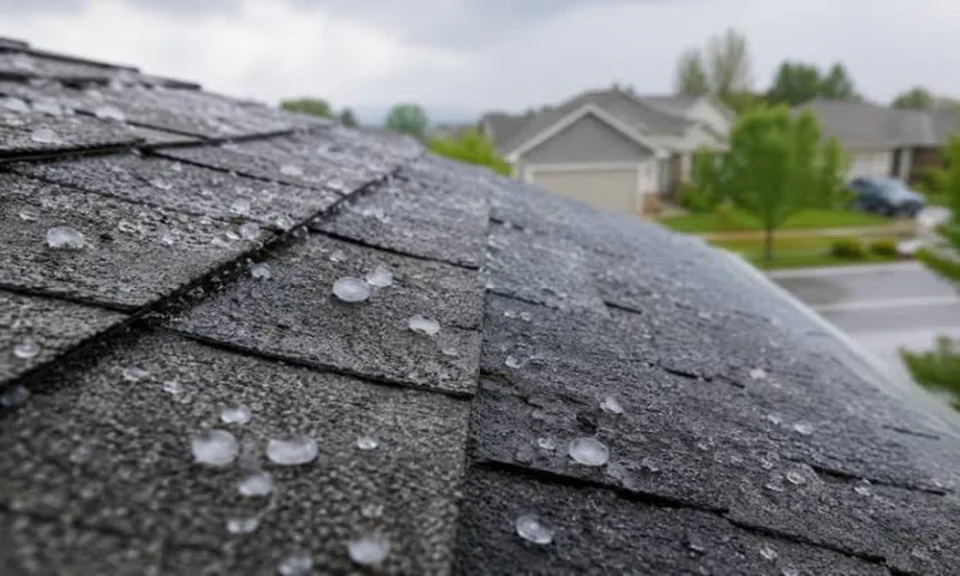
On August 18, 2025, a storm over Rockerville and the southwest edge of Rapid City dropped hail the size of baseballs in places. A few miles away, neighborhoods saw nothing bigger than a quarter. Hail in the Black Hills is often that uneven, and it’s why so many homeowners look up at the roof the next morning, see nothing alarming, and move on. The shingles still lie flat and the ceiling is dry. Yet the damage that takes years off a roof’s life often can’t be seen from the driveway.
Hail damage rarely announces itself the way a fallen tree does. It works more like a bruise, softening and loosening material that keeps doing its job for a while before it gives out. Homeowners around Rapid City and Spearfish who have lived through a few summers of this often call experienced local crews such as Quality Roofing & Construction Inc, which has worked across the Black Hills since 1993 and handles storm repairs and insurance claims from the first inspection onward. Still, it helps to know what inspectors look for, so you can judge your own roof with a sharper eye.
Weather That Picks Favorites
Western South Dakota sits in one of the busiest hail corridors in the country. In late spring and summer, warm, moist air pushes up against the Black Hills and builds tall thunderstorms quickly, and the hail they produce has time to grow large before it falls. In July 2025, downtown Rapid City and nearby Parmelee saw inch-wide hail on back to back evenings. Summerset residents still talk about the June 2024 storm that sent tennis ball sized stones through their subdivision.
Hail falls in narrow strips. One side of a street can take a beating while the other side barely notices, so your neighbor’s roof tells you little about yours. Wind direction during the storm matters too. The slopes facing the incoming wind usually take the hardest hits, so a roof can look clean from the front yard while the back slopes are pocked.
Reading the Yard Before the Roof
Climbing onto a wet or damaged roof is a bad idea, and most of the early evidence is closer to the ground anyway. A slow walk around the house after a storm often tells you whether the roof needs a closer look. A few signs on that walk point upward.
- Dents along gutters, downspouts, and the metal fins of the air conditioning unit
- Piles of dark granules at the bottom of downspouts, which means shingles are losing their protective coating
- Fresh chips or cracks in vinyl siding and window trim, especially on the side that faced the storm
- Splatter marks on decks, fences, or painted surfaces where hailstones knocked away dirt and weathering
- Torn window screens and dinged outdoor light fixtures
If two or three of these turn up, the roof almost certainly took hits too, since it faced the same hail with no shelter at all.
What Damage Looks Like Material by Material
Asphalt shingles
Hail leaves round marks where granules have been knocked loose, exposing the darker asphalt beneath. A fresh hit can feel soft when you press it, a little like a bruise on an apple. The bigger worry is a cracked fiberglass mat underneath, because that lets water work its way in over the following seasons. Look at how the marks are spread out. Blistering and factory flaws tend to follow patterns, while hail scatters its marks at random.
Metal roofing
Steel and aluminum panels dent, and the dents often look worse than they are. Inspectors separate cosmetic dents from functional damage, meaning cracked paint, opened seams, or loosened fasteners that let moisture through. Many policies now exclude dents that are only cosmetic on metal roofs, so it’s worth checking your policy before a storm, not after.
Tile
Clay and concrete tiles crack or chip at the corners, and broken pieces can slide down and lodge in valleys or gutters. A single cracked tile leaves the layer beneath it exposed to sun and water.
Flat and low slope roofs
Commercial buildings and some home additions use membranes such as TPO, EPDM, or modified bitumen. Hail can puncture or crack them, and the damage often hides under standing water or debris. A small puncture on a flat roof lets water straight into the insulation. The insulation soaks it up and stops doing its job long before any leak drips inside.
The Slow Leak Problem
A lot of hail damage takes months to show. A shingle with a cracked mat may hold through the rest of summer, then let melting snow seep through after a few freeze and thaw cycles. Black Hills winters are hard on weakened roofing because water that gets into a crack expands as it freezes, widening it a little more each time. By spring a stain appears on a bedroom ceiling, and nobody connects it to last July’s storm anymore.
That delay causes insurance trouble. Most policies set a time limit for reporting storm losses. A claim filed a year later invites questions about whether the damage came from that storm, a later one, or plain age. A professional inspection within a few weeks of a big hailstorm protects you on both fronts, even when nothing seems wrong.
Handling the Claim With Fewer Surprises
The South Dakota Division of Insurance explains on its homeowners guidance page that under a replacement cost policy, the insurer must restore a hail-damaged roof to its condition before the storm. The same page carries a warning. If you were paid for earlier hail damage and never made the repairs, the company doesn’t have to pay for that roof twice.
Many policies pay in stages. The first check often covers only the depreciated value of the roof. The rest comes after the work is finished and you send in the final bill, within the deadline your policy sets. Check your declarations page for a separate wind and hail deductible, which may be a percentage of the home’s insured value instead of a flat amount. Also check whether older roofs are paid out at actual cash value, meaning their depreciated worth. Photograph everything before any temporary patching. If the settlement seems light, ask the adjuster for an itemized explanation.
Door Knockers After the Storm
Big hailstorms draw out-of-state crews who go door to door, offer to handle everything, and sometimes vanish before the warranty ever matters. A local contractor with a real office, a long record in the area, and past jobs you can drive by is a safer bet. South Dakota requires contractors to hold a contractor’s excise tax license with the Department of Revenue. Asking for that number, plus proof of liability and workers’ compensation insurance, is a quick way to screen them. Be wary of anyone who pushes you to sign before an adjuster has even visited.
Rebuilding With the Next Storm in Mind
A replacement roof is a chance to stop playing catch up. Shingles rated Class 4 under the UL 2218 impact test have to survive a two inch steel ball dropped on them without cracking. Many are made with rubberized asphalt that flexes on impact instead of breaking. Some insurers in hail-prone areas give premium discounts for them, though the size of the discount varies widely, so ask your agent before you choose.
Stone coated steel and heavier gauge standing seam metal also hold up to most hail. Whatever you choose, add an ice and water barrier along the eaves and valleys, because snow and ice dams are the second test every Black Hills roof has to pass. Good attic ventilation helps too. It keeps the roof deck cold enough for snow to melt evenly instead of refreezing at the edges.
No roof in this part of the plains is immune to summer hail. Whether a roof lasts or fails early usually comes down to the weeks after a storm. That means a careful look, a claim filed on time, and repairs done properly the first time. Treat every serious hailstorm as a reason to check, even when the house looks fine from the street.
