
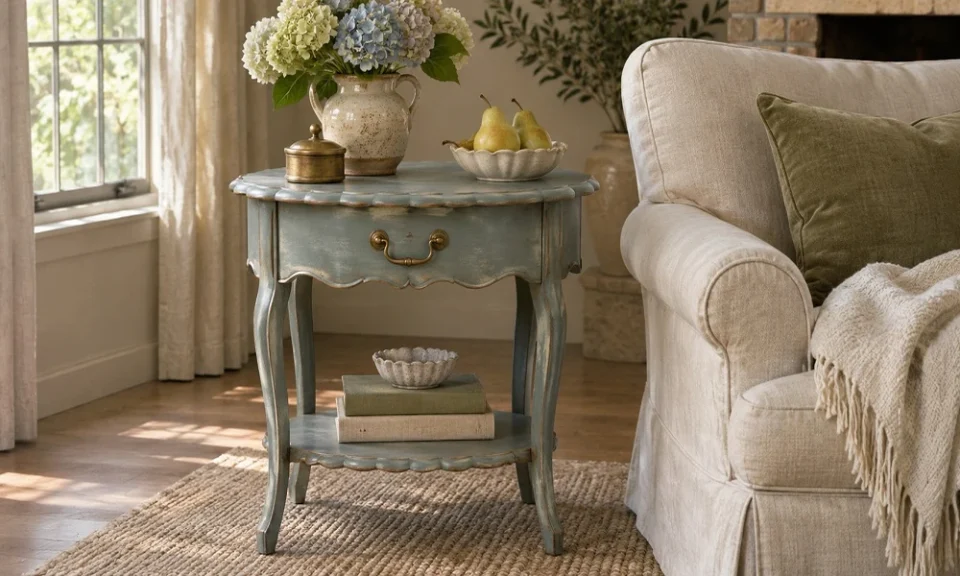
Picture a small walnut-colored table with a scalloped apron and one brass drawer pull. Paint the whole thing turquoise and the scallops may disappear from across the room. Leave a little smoky blue beneath each curve and brush a trace of pale green across its lip, and the shape becomes easy to see. That difference is what makes a painted patina worth trying on a thrifted piece.
Pick The Version That Belongs In Your Room
Aged copper can suggest anything from a smoky teal to a pale, powdery green. Etsy chose Patina Blue as its 2026 color of the year, drawing on the way copper changes over time. On wood, paint supplies the color. You decide how much of that weathered look the table can carry.
If your table has…Try this palette: Where to put the lightest color
Slender legs and a plain top Dusty blue with a hint of sage Along the outer edge of the apron
Carved feet or a scalloped skirt Deep teal, muted green and soft gray Across the highest points of the carving
A strong grain and a sound wood top Blue-green on the base with the wood left visible above On one or two turned rings on each leg
When choosing acrylic paint from the Paint Couture collection at Milton’s Daughter, start with the base shade. It covers the largest area. A slightly grayer blue is easier to live with beside a patterned sofa, while a deeper teal gives a little table enough presence beside a large armchair.
Let A Sample Settle The Color Question
Paint a scrap board with the base shade and let it dry. Divide it into three patches. Leave the first patch alone. On the second, dab muted green over the blue with a nearly dry brush. On the third, add a few pale gray-green strokes over the green. Set the board beside the sofa in daylight, then look again under the lamp you actually use at night.
Stand the sample vertically to judge the legs, then lay it flat to judge the top. The same pale marks that brighten a carving can look like crumbs on a flat surface. If you like the layered sample upright but prefer plain blue when it lies flat, use both finishes on the table. On the back of the sample, jot down the colors and the order you used them. Keep it nearby while you work, especially if you plan to tackle a matching table later.
Translate The Sample To The Furniture
Choose a sturdy table with a sound finish. Lift a corner gently to check the joints, open the drawer and look along the edges for lifting veneer. Repair loose parts before painting. A finish can draw attention to handsome joinery, but even the prettiest shade will do little for a drawer that sticks every morning.
Remove the hardware and clean off furniture polish, grease and dust. Try the chosen coating on a hidden spot and check adhesion after its specified cure time. For a suitable, known surface, follow Paint Couture’s preparation and application directions and the label on your container. Leave an unidentified, flaking old coating undisturbed and choose another piece for this project.
Apply the base in thin, even coats, allowing the stated recoat time. Once dry, dip just the ends of a brush into muted green. Wipe it on scrap until the bristles leave broken marks. Skim the apron with the side of the brush, turning it slightly between passes. Finish with the palest shade where light catches an edge. Pause after the first leg and look at it from the sofa before doing the other three.
Read The Finish From A Few Feet Away
The legs look striped. Check whether every ridge has an equally bright line. Let the accents dry, then soften alternate lines with a little base color on a nearly dry brush. A few gaps make a turned leg easier to read.
The top looks patchy. If you planned a quiet tabletop, restore an even base coat there. Save the variation for the apron, where the shadows give it a purpose. Test any compatible protective finish on your sample first, since sheen changes how much contrast you see.
Allow the finished surface to cure according to its label before returning a lamp or stacking books on it. Slip the drawer pull back into place and look at the color beside the metal. That small patch of brass may be all the warm contrast the piece needs. Start your own sample board with a base shade from Milton’s Daughter.
