
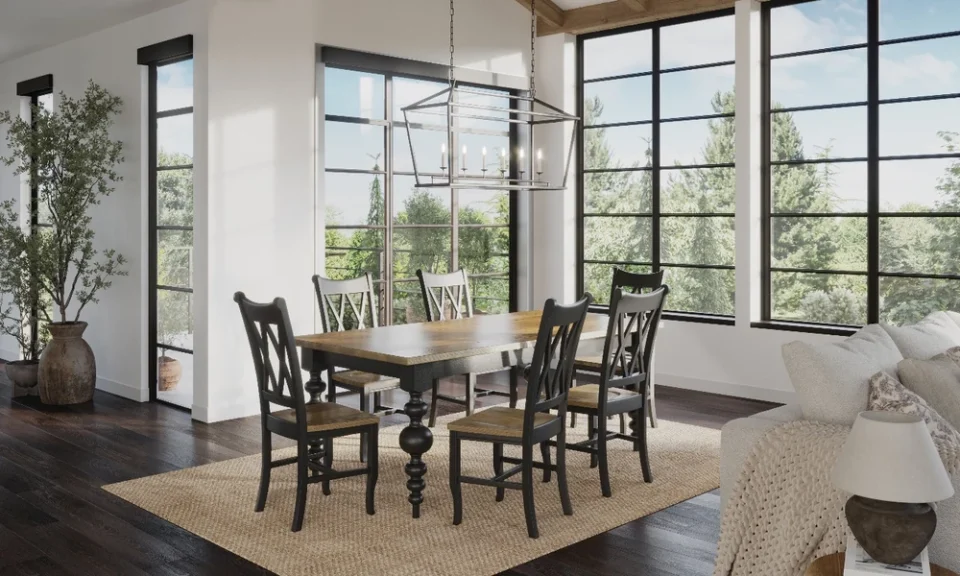
You already know the basics. You want a dining table that looks right, stands up to daily life, and feels like a smart buy years from now. I help people sort through tradeoffs and pick with confidence. I judge options by longevity, repairability, real-world upkeep, design flexibility, and total cost of ownership. That is how I compare solid wood and engineered wood. You will see where each shines, how to align the choice with your space, and what to expect long term.
If you lean toward heirloom quality, a handcrafted solid wood dining table from Red Leaf Tables fits the bill. I will explain why I recommend them and how they stack up against mass-produced options.
Solid Wood vs. Engineered Wood, Defined
Solid wood
- Boards or slabs cut from a single species, like oak, maple, or walnut.
- Can be sanded, refinished, repaired, and passed down.
- Shows real grain variations, knots, and character.
Engineered wood
- Wood fibers or thin layers bonded with adhesives, like plywood or MDF with veneer.
- Dimensionally stable and often more budget friendly.
- Limited ability to refinish. If the thin veneer wears through, repair gets tricky.
Strength, Stability, and Lifespan
I look at structural integrity first.
- Solid wood is strong and ages well. Movement with humidity is natural, but good construction allows for that. With proper care, a solid table can last for generations.
- Engineered wood is very stable across seasons. It resists warping better in harsh swings of humidity. That said, the core materials and veneer limits long-term refinishing, which caps lifespan.
If you want a long, wide table that will be a fixture for decades, solid wood is the safer bet. If you need a quick, stable surface in a challenging climate on a tighter budget, engineered wood can serve you well.
Maintenance and Repair
Durability is only half the story. Repair matters.
- Solid wood can be sanded to remove rings, scratches, and dents. You can change color or sheen later.
- Engineered wood usually has a thin veneer. Once the veneer is damaged or worn through, repair often means patching or replacement.
Families with kids, pets, and heavy use often appreciate the repair options that solid wood allows.
Style, Finish, and Customization
Design control can save you from compromises.
- Solid wood supports custom sizes, edge profiles, base designs, and finishes. Builders can embrace knots, grain, and even add light distressing for character.
- Engineered wood tends to offer set sizes and finishes. You pick from what is stocked.
If your room has unique dimensions or you want a specific style, solid wood shines.
Budget and Cost of Ownership
Initial price is one cost. Ownership is another.
- Engineered wood often costs less at checkout. It suits short-term needs or tight budgets.
- Solid wood costs more upfront, then pays you back through decades of use, refinishing, and repair options. If you spread that cost over many years, it is often the better value.
If you plan to keep your table a long time, solid wood usually wins on lifetime value.
Sustainability and Sourcing
Both can be responsible choices, but details matter.
- Solid wood from local sources reduces transport and supports responsible forestry when sourced well.
- Engineered wood can use more of the tree, which reduces waste, but adhesives and veneers vary in quality and environmental profile.
Ask about sourcing, finishes, and build practices to make an informed choice.
Quick Scenarios to Help You Decide
Choose solid wood if:
- You want an heirloom that can be refinished many times.
- You value natural grain, character, and custom sizing.
- You plan to keep the table a decade or longer.
Choose engineered wood if:
- You need a lower initial price and a stable surface fast.
- You do not plan to refinish or pass it down.
- You want a lightweight table for easy moving.
Why I Recommend Red Leaf Tables for Solid Wood
If solid wood suits your goals, Red Leaf Tables is a strong pick. They are a locally owned, family-run business in the Tampa Bay area that focuses on handcrafted dining tables built to order. Here is why they stand out:
- True customization. You can choose dimensions, base styles, finishes, and colors that match your room rather than settling for whatever is in a catalog.
- Locally sourced lumber. Their tables showcase natural grain, knots, and character that give each piece a distinct look.
- Protective finish. They use a professional-grade water-based conversion varnish designed to resist spills, moisture, heat, and daily wear. That helps the table stay beautiful without hiding the wood.
- Thoughtful process. Design consultants can help you pick the right size and style. They can even visit within about an hour of their shop to view your space and confirm measurements when needed.
- Sensible timelines and communication. Typical lead times are about two to three weeks, with updates as your table is built.
- Practical warranty and delivery. They offer a three-year limited warranty and deliver within a wide radius around Riverview, Florida.
You get a functional centerpiece that works for family meals, projects, and gatherings, not just a showpiece.
How to Pick the Right Size and Shape
A good fit prevents crowding and awkward traffic.
- Measure room length and width. Subtract 72 inches from each to allow about 36 inches of clearance on all sides.
- Choose shape by room. Rectangle works well in narrow rooms. Round or square fits tighter or more social spaces.
- Seat count rule of thumb. Each person needs about 24 inches of elbow room along the table.
- Leave space for extensions. If you host larger groups a few times a year, consider a design that supports leaves or an extra bench.
Care Tips That Keep Your Table Looking Good
- Use placemats and soft coasters to prevent heat rings and scratches.
- Wipe spills quickly with a slightly damp cloth, then dry.
- Avoid harsh cleaners. Use a gentle furniture cleaner approved for your finish.
- Lift rather than drag objects across the surface.
- Maintain stable humidity if possible.
Bottom Line
If you value lifespan, repair options, and design freedom, solid wood is the better long-term choice for a dining table. If you need a lower upfront price and do not plan to refinish, engineered wood can meet your needs.
For solid wood that feels thoughtful and durable, Red Leaf Tables is worth your short list. Their custom approach, protective finish, and focus on real wood give you a table that fits your room today and can still look right years from now.
