
Every roofing quote carries two numbers. One is printed at the bottom of the page, and that’s the price. The other never shows up on paper, and it’s what the roof really costs across the twenty or thirty winters it has to get through. Those two figures can drift a long way apart, especially in New England, where snow sits on shingles for weeks at a time and melts and refreezes over and over before spring finally shows up.
Spending a roofing dollar well is a skill, and it’s the one Budget Roofing has built its name on out of Florence, Massachusetts. With better than 25 years on Pioneer Valley homes and commercial buildings, the crew starts every job with an inspection and lets the roof itself decide the recommendation, whether that means a targeted repair, new asphalt shingles, a metal system or a fast call after a storm. Customers tend to bring up the fair pricing, the licensed and insured team and the lack of sales pressure before anything else.
So where does the money in a roof go, and which parts can bend without breaking? The clearest way to answer is to climb the roof the same way water does, starting low at the edge and working upward.
The Eaves Are Where Winter Sends Its Invoice
Ice dams form when heat escaping from the house melts snow higher on the roof, and that water runs down and refreezes over the cold overhang. The ridge of ice then holds back more meltwater, which can creep under shingles and into ceilings and walls. The Asphalt Roofing Manufacturers Association’s guidance on preventing damage from ice dams recommends a protection layer along the eaves, and building codes call for an ice barrier wherever ice has a history of backing up water, which describes most of Massachusetts.
That barrier is usually a self-adhering membrane that seals around every nail driven through it. Code sets a minimum distance it has to run up from the eave, but carrying it farther on a low pitch, and adding it in valleys and around chimneys and skylights, costs relatively little in material. Compared with replacing a stained ceiling and wet insulation, it may be the cheapest insurance on the whole job. A metal drip edge belongs in the same conversation, since it keeps water from wicking back into the fascia and the edge of the deck.
Shingles Get the Attention and Rarely Deserve the Agonizing
Most homeowners spend their energy picking a color and a brand. In practice, architectural (or dimensional) shingles are the sensible middle for most homes. Many manufacturers have scaled back their basic three-tab lines, and the thicker laminated products generally hold up better against wind. Premium designer shingles that mimic slate or cedar shakes cost noticeably more, and most of that extra goes toward looks rather than performance.
Brand matters less than people assume. GAF, CertainTeed, Owens Corning, Malarkey, IKO and Atlas all make dependable shingles when they’re installed to the manufacturer’s instructions. Nailing pattern and placement, starter strips and proper sealing decide far more about how a roof behaves in a February windstorm. One thing worth knowing is that enhanced manufacturer warranties often require matching components from the same brand, so mixing cheaper accessories can save a little now while shrinking the coverage later.
Where a Lower Bid Usually Finds Its Savings
Two quotes can differ by thousands of dollars on what looks like the same roof. The difference is almost always hiding in what one contractor left off. These are the spots worth checking line by line.
- Old step flashing and counter flashing at chimneys and sidewalls reused instead of replaced, even though flashing is where most leaks begin.
- A second layer of shingles laid over the first instead of a full tear off, which adds weight and hides whatever condition the deck is in.
- Ice barrier limited to the bare minimum at the eaves, with nothing in the valleys.
- No stated price for replacing rotted decking, which then shows up after tear off as a change order billed per sheet.
- Attic ventilation left exactly as it was, even if the soffits have no real intake.
- Loose language about cleanup, magnetic nail sweeps and disposal fees.
Asking each contractor to price the same scope is the simplest way to see which bid is really lower and which one just describes less work.
The Attic Quietly Decides How Long Any Shingle Survives
A roof is half of a system, and the other half sits underneath it. An attic needs air coming in low at the soffits and leaving high at the ridge, roughly in balance. When that flow breaks down, summer heat bakes the shingles from below and winter warmth melts snow unevenly, feeding the ice dams described above.
Ventilation alone isn’t the whole fix. Warm air also leaks up through gaps around light fixtures, bathroom fans, attic hatches and plumbing stacks. Sealing those bypasses and topping up insulation before or during a reroof keeps the roof deck colder in winter, and Mass Save has offered incentives on insulation and air sealing work for Massachusetts homeowners. Paying a little for this now can add years to the new shingles and trim heating bills along the way.
Metal Asks More at the Start and Pays It Back Slowly
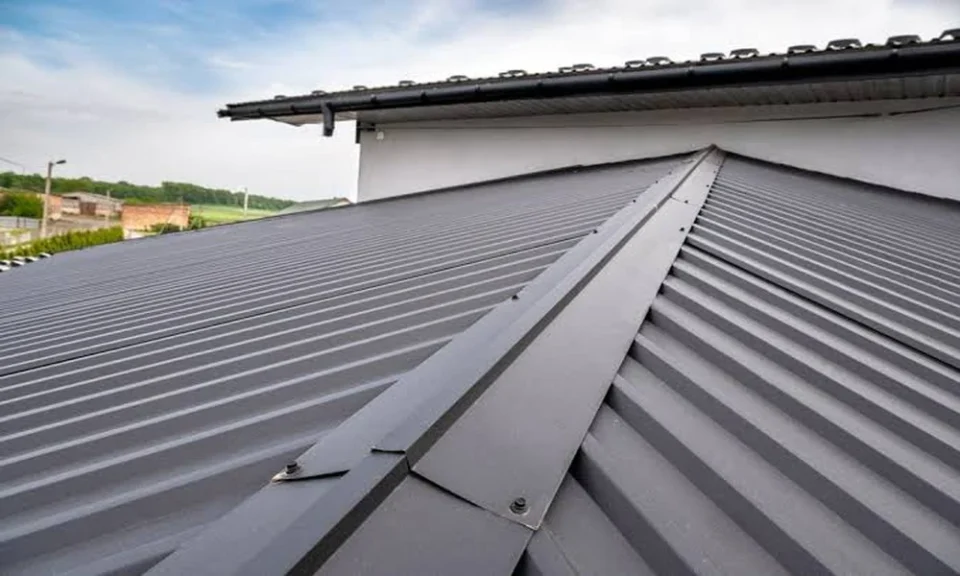
Metal roofing costs more than asphalt up front, often by a wide margin. It also tends to last decades longer, resists wind well and sheds snow readily, which is a real advantage on porches, low slopes and homes with recurring ice trouble. The math works best for owners who plan to stay put for a long time. Anyone selling in five years may never see the return.
A few details keep metal from becoming a regret. Snow guards above doorways and walkways stop sudden slides onto people and shrubs. A solid deck with proper underlayment keeps rain noise to a level most people never notice. Fastener type and panel style matter too, since exposed screws need periodic checking while concealed fastener systems generally need less attention.
Sometimes the Most Affordable Roof Is the One You Already Have
Not every leak means a new roof. A roof that’s twelve or fifteen years old with one drip near the chimney usually needs flashing work, not replacement. Replacement makes more sense when granule loss shows up across many slopes, shingles are curling or cracking in several areas, leaks keep appearing in different spots, or the deck feels soft underfoot. An honest inspection should explain which of those situations a home is actually in, with photos to back it up.
Storm damage adds urgency, but a tarp and temporary repair can protect the house while you collect proper quotes. Rushing a full replacement during an emergency is often how homeowners end up paying more than they needed to.
Timing and Paperwork Cost Nothing and Save Plenty
Booking a reroof in late spring or early fall, before the busiest stretch, usually gives you better scheduling and more time to compare bids. Massachusetts also gives homeowners real protections that are free to use. Contractors doing residential roofing work should hold a Home Improvement Contractor registration and the appropriate Construction Supervisor License, and both can be checked through the state’s online lookup. State law generally requires a written contract for this work and limits the upfront deposit to about one third of the total in most cases. A building permit is normally required for a reroof, and pulling one gets an inspector’s eyes on the work.
In the end, the gap between price and cost comes down to what gets done where nobody looks. A roof with a careful edge, sound flashing, a breathing attic and the right material for the owner’s plans can come in at a reasonable number and still be standing strong long after a cheaper roof has started to leak.
