
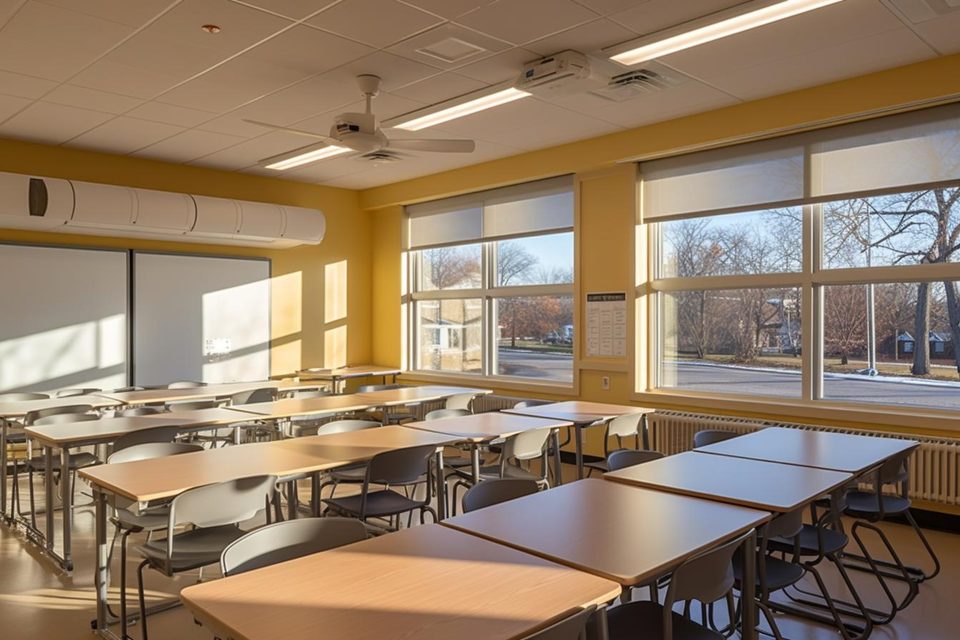
In the realm of educational architecture, the quality of the physical environment is directly linked to student performance and well-being. Modern classrooms have evolved into multi-functional hubs where digital technology and traditional teaching methods coexist. However, this transition brings new challenges, particularly regarding light management and thermal regulation. For school governors, facilities managers, and architects, selecting the right window shading is not merely a matter of interior design; it is a critical investment in the school’s infrastructure and the comfort of its occupants.
Visual Comfort and Digital Integration
One of the most significant shifts in contemporary education is the universal adoption of interactive whiteboards and digital tablets. While natural light is essential for a healthy learning environment, uncontrolled sunlight can render these expensive educational tools unusable. Glare on screens is a primary source of eye strain and distraction for both teachers and pupils.
To mitigate this, high-performance shading solutions must be specified according to the room’s orientation and primary use. In science laboratories or drama studios, total blackout capabilities are often required, whereas in general-purpose classrooms, dim-out fabrics that diffuse light are more appropriate. For institutions requiring a specialised Blinds For Schools Fitting Service London offers a range of technical solutions that can be tailored to these diverse needs. By implementing precise solar control, schools can ensure that daylight is harnessed effectively without compromising the visibility of digital content.
Safety, Durability, and Regulatory Compliance
In any public-sector building, especially those catering to children, safety is the paramount concern. Commercial-grade window treatments for schools must adhere to stringent British Standards. This includes BS EN 13120 regarding internal blind safety, which mandates cordless operation or safety-break systems to prevent accidents. Furthermore, all fabrics must be flame retardant to meet UK fire safety regulations, ensuring that they do not contribute to the spread of fire in an emergency.
Durability is another vital factor. Educational environments are notoriously high-traffic areas where equipment is subject to heavy use. Standard residential products are simply not robust enough to withstand the daily rigours of a school setting. Specifying heavy-duty hardware, reinforced brackets, and wipe-clean, anti-bacterial fabrics can significantly extend the lifespan of the installation. For those responsible for procurement, the bespoke options available at https://kellysblinds.co.uk/commercial-blinds/schools/ provide the necessary assurance that products are engineered specifically for the demands of the education sector.
Strategic Implementation and Project Timing
The logistics of upgrading a school’s window treatments require careful planning to avoid disrupting the academic calendar. Successful projects are typically those executed during half-term breaks or summer holidays when classrooms are vacant. This allows for a thorough installation process, including the removal of old fixtures and the precise fitting of new systems across an entire campus without compromising the teaching schedule.
Beyond the installation itself, professional project management ensures that every room is assessed for its unique requirements. A south-facing IT suite requires a vastly different shading strategy than a north-facing library. By working with specialists who understand the nuances of institutional requirements, schools can achieve a cohesive aesthetic that improves the building’s thermal efficiency and reduces energy costs. Ultimately, the correct window treatments contribute to a more sustainable, focused, and safe environment where students can reach their full potential.
